What’s planned: Metro / Rail Connectivity to Jewar Airport
30 Sep, 2026
What’s planned: Metro / Rail Connectivity to Jewar Airport
For the real-estate sector, connectivity is one of the most important factors influencing the development of a location. Better access to public transport can make an area more convenient for residents, employees, businesses, and visitors.
Metro Connectivity to Jewar Airport
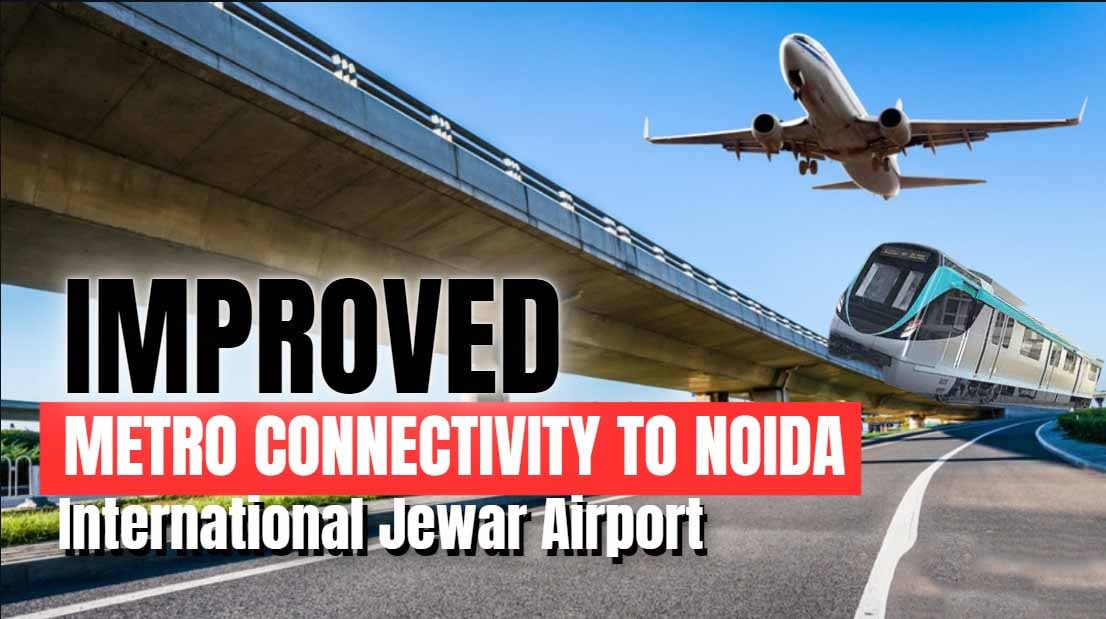
Plans for metro connectivity have been discussed to connect the airport with the wider Noida–Greater Noida urban region. Such a connection could provide an additional public-transport option for people travelling between the airport and surrounding residential and commercial areas.
A direct or efficient metro connection can reduce dependence on private vehicles and improve accessibility for people working at or travelling through the airport.
For real estate, stations and transit corridors can become important development points, particularly when supported by roads, commercial facilities, and residential communities.
Proposed Rapid Rail Connectivity
Regional rail connectivity is also an important part of the broader transportation planning around the airport.
The proposed Delhi–Meerut Regional Rapid Transit System (RRTS) corridor and its planned extensions have been discussed in the context of improving connectivity across the wider NCR region. Better integration between regional rail networks and the airport could eventually make Jewar more accessible from different parts of the National Capital Region.
Improved regional connectivity can support the movement of workers, business travellers, tourists, and residents.
Yamuna Expressway Connectivity
While metro and rail projects receive considerable attention, the Yamuna Expressway remains one of the key road connections to the airport.
The combination of expressway connectivity, proposed metro infrastructure, regional rail links, and other transportation projects could create a more integrated transportation network around Jewar.
For property buyers, this means that connectivity should be evaluated from multiple directions rather than considering only the distance to the airport.
Why Metro and Rail Matter for Real Estate
Public transportation can influence how quickly an area develops.
When a location becomes easier to reach, it can become more attractive for:
- Residential projects
- Commercial centres
- Offices
- Retail businesses
- Hotels
- Warehousing and logistics
- Rental housing
- Mixed-use developments
Metro and rail stations can also encourage transit-oriented development, where residential and commercial projects are planned around convenient public-transport access.
Potential Benefits for Residents
Improved public transportation could provide several practical benefits to people living around the Yamuna Expressway and Jewar region.
Residents may have easier access to employment centres, educational institutions, healthcare facilities, shopping areas, and other parts of the NCR.
Better connectivity can also be particularly useful for people who do not own private vehicles or prefer public transportation for regular commuting.
What Property Buyers Should Watch
People considering real estate around Jewar Airport should keep track of the official status of proposed metro and rail projects.
There can be a significant difference between a project that is merely proposed, one that has received approval, one under construction, and one that has actually become operational.
Before purchasing property based on a future transportation project, buyers should verify:
• Official alignment and station locations
• Government approvals
• Construction status
• Expected connectivity
• Actual road access to the proposed station
• Property documentation and land-use permissions
This is particularly important because marketing material sometimes describes proposed infrastructure as if it is already confirmed or operational.
The Bigger Connectivity Picture
Jewar Airport is developing within a much larger infrastructure ecosystem. The airport's long-term significance will depend not only on aviation facilities but also on how effectively it becomes connected with Noida, Greater Noida, Delhi-NCR, the Yamuna Expressway corridor, and other surrounding regions.
As road, metro, rail, industrial, and commercial infrastructure develops together, the region could experience substantial urban and economic transformation.
Conclusion
Metro and rail connectivity can become an important component of Jewar Airport's long-term development story.
For residents, better public transportation can mean easier commuting and improved access to employment and services. For the real-estate sector, connectivity can support the development of residential, commercial, hospitality, and logistics projects.
However, property decisions should be based on verified infrastructure plans, actual connectivity, legal documentation, location quality, and existing development, rather than relying only on future-project expectations.
The combination of airport + expressway + metro/rail + industrial development is what makes the broader Jewar region an important area to watch in the evolving NCR real-estate landscape.

Leave A Reply
By using form u agree with the message storage, you can contact us directly now.